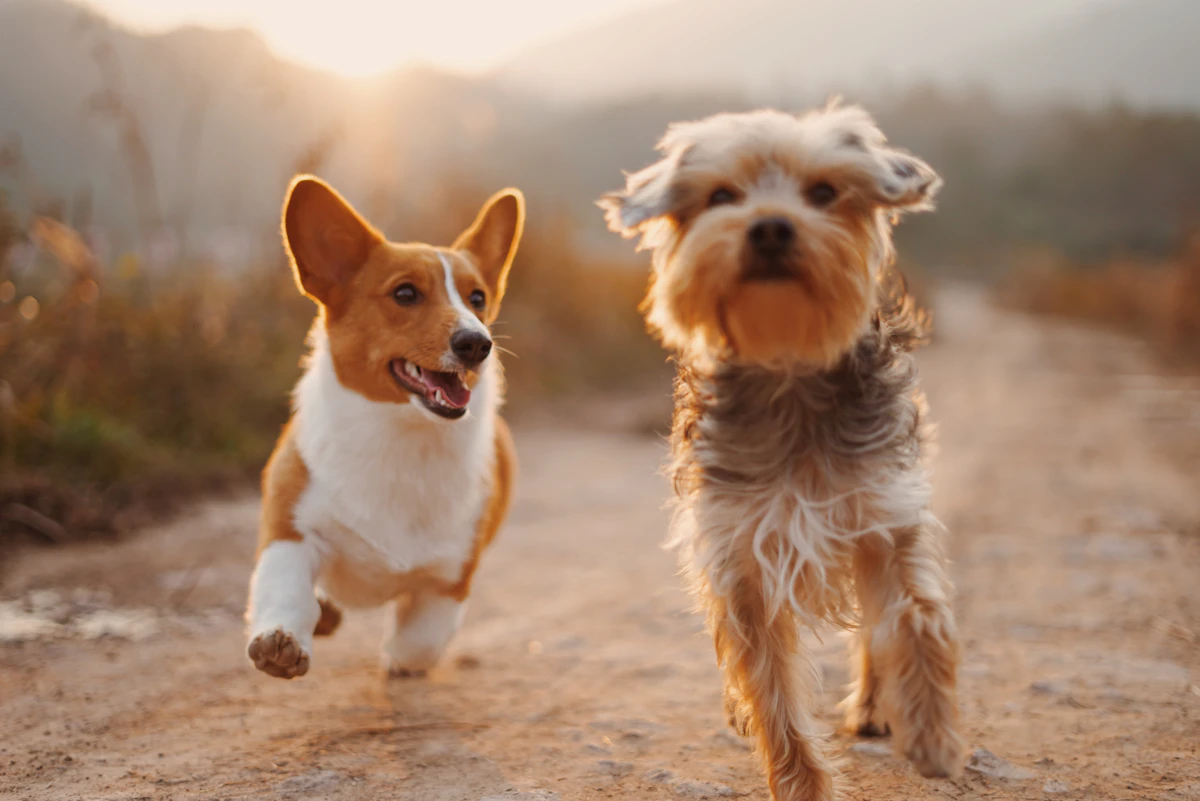
One of the most dangerous myths in animal handling is the widespread assumption that "a dog with a wagging tail is always a friendly dog." Every year, thousands of veterinary technicians, postal carriers, and well-meaning dog lovers are bitten by dogs whose tails were wagging vigorously right up until the moment of the bite.
In canine ethology (the study of animal behavior), a wagging tail simply signals emotional arousal and a willingness to interact. It is the canine equivalent of human speech: it can convey warm friendship, anxious ambivalence, tense insecurity, or an outright warning to back away immediately.
Recent neurobiological research has revealed that even the subtle directional bias of a wag (whether it arcs predominantly to the dog's right or left side) reveals internal emotional valence.
1. The Trieste University Discovery: Left vs Right Brain Lateralization
In landmark behavioral studies published in Current Biology by researchers at the University of Trieste in Italy, neuroscientists filmed dogs interacting with different visual stimuli using high-speed cameras.
Because the canine brain is lateralized (the left cerebral hemisphere controls the right side of the body, and the right cerebral hemisphere controls the left side):
| Primary Direction of Tail Wag | Controlling Brain Hemisphere | Associated Emotional Valence | Common Triggers |
| :--- | :--- | :--- | :--- |
| Biased Toward the Dog's RIGHT Side | Left Cerebral Hemisphere | Approach / Positive Feelings: Happiness, affection, social relaxation, excitement | Seeing their beloved owner, friendly playmate dog, or familiar food bowl |
| Biased Toward the Dog's LEFT Side | Right Cerebral Hemisphere | Withdrawal / Negative Feelings: Fear, anxiety, defensive aggression, avoidance | Seeing an unfamiliar dominant dog, an aggressive stranger, or veterinary clinic instruments |
| Symmetrical Slow Sweep | Balanced Bilateral Activity | Neutral curiosity or exploratory sniffing | Evaluating a novel scent on a hiking trail |
Remarkably, follow-up experiments demonstrated that other dogs read these subtle directional asymmetries instantly. When dogs observed an animated dog wagging to the left, their own heart rates accelerated and their stress postures intensified. When observing a right-biased wag, they remained relaxed.
2. Tail Carriage Height: The Vertical Hierarchy
While the lateral sweep communicates emotional valence, the height at which the tail is carried reflects social confidence, arousal, and hierarchical intention:
High, Vertical Flagging Tail (Stiff at 90 Degrees)
When a dog holds their tail stiffly upright, often vibrating rapidly with tiny stiff movements at the tip, this is not a friendly greeting. It signals high physiological arousal, assertive dominance, or hyper-vigilance. A vertical tail maximizes pheromone dissemination from the anal glands. If accompanied by stiff front legs, a closed mouth, and direct eye contact, this is a clear warning that an aggressive escalation is possible.Horizontal, Parallel to the Spine (Relaxed)
A tail held level with the back, swaying in broad, gentle, loose arcs, communicates social neutrality or calm curiosity. The dog is comfortable and assessing their surroundings without tension.Low, Tucked Beneath the Abdomen
When a dog pulls their tail tightly between their hind legs against their groin, they are attempting to make themselves physically smaller and cover their anal scent glands. This communicates intense fear, social submission, or acute pain.- Never force a dog with a tucked tail to interact with strangers or loud children. A terrified, cornered dog may resort to a fear-based bite if their avoidance cues are ignored.
Always evaluate tail carriage in the context of the dog's specific natural breed conformation. A Greyhound, Whippet, or Italian Greyhound naturally carries their tail low between their hocks even when joyful. Conversely, a Pug, Akita, Shiba Inu, or Basenji has a naturally curled tail that rests perpetually high over their dorsal spine.
3. The "Helicopter Wag": The Universal Sign of Pure Joy
If you want to know when a dog is genuinely happy, look for the propeller or helicopter wag.
In this movement, the tail does not simply swing back and forth horizontally. It rotates in full circular loops, accompanied by a loose "wiggle" that ripples through the dog's entire rear end, hips, and shoulders.
The mouth is typically soft and slightly open with a relaxed tongue, the eyes are soft with round pupils, and the dog may lower their front end into a play bow. This full-body relaxation is the definitive marker of a friendly, playful, and delighted canine companion.

About Elena Vance
Certified Canine Behavior Consultant (CBCC-KA) with 15 years in rescue rehabilitation and positive reinforcement conditioning. Has successfully placed over 1,200 shelter dogs.